
MOOD MATCH
Matched people with a relevant place to go out based on their vibe and preferences.
Tools Used

View Prototype

JUMP TO


Introduction
Mood Match is a mobile app that recommends where to go out based on a person’s mood, available time and location, whether they are heading out alone or with friends. This case study follows the project from competitor and user research through personas, information architecture, flows and business model, to the design system and the final screens.
The Challenge
Going out should feel spontaneous, but planning it rarely does. I started by defining the goal, the problem and the people it affects, then looked at what the apps they already use get wrong.
Context
The Goal
Mood Match was created to make going out simple and inspiring. The app’s goal is to connect people with experiences that match their mood and vibe whether solo or with friends.

The Problem
People often find it hard to plan where to go out. Existing apps give outdated or scattered information and don’t match the user’s mood or group needs. This causes wasted time, confusion and missed chances for fun experiences.

Target Users
Men and women aged 20-30, living in urban areas and going out frequently.
City visitors who want local experiences even without knowing the city.

Criterion
Easy
Zappa
Tiuli
Karamel
Discovery
Nearby venues by category
Events by date and venue
Trails by region and difficulty
Activities by category
Freshness
Open-now filter
Dated event listings
Season filters, user trail updates
Not verified
Personalization
Favorites/history; tailored suggestions not checked
Favorites; tailored suggestions not checked
Route filters; tailored suggestions not checked
Not verified
Group planning
Not verified
Not verified
Not verified
Group activities listed, shared planning not checked
Booking
Not verified
Ticket purchase
Not verified
Not verified
Trust signals
Ratings and reviews
Official event details
Route details and user updates
Provider listings; verification not checked
Mood Match opportunities to test
Match nearby options to mood and budget, not only venue category.
Show opening hours and availability before someone heads out.
Help friends compare a shared shortlist and agree on one place.
Research & Insights
A quantitative survey of 40 people and a round of in depth interviews, turned assumptions into evidence and the patterns that came back became the two personas the rest of the project was designed around.
User Survey
First Research Method: Quantitative survey.
Sample Size: 40 participants.
The majority of participants go out at least once a week. The
target audience has high engagement with leisure activities.
75%
65% reported difficulty planning quickly and easily to decide
where to go.
20
16
12
8
4
0
Strongly agree
agree
Both
Disagree
Strongly disagree
Just over half of users typically use apps or websites to plan outings.
52.5%
Most users feel existing apps do not help them find places that match their mood or desired atmosphere.
65%
Among those who do use apps, 40% said the information
is outdated or incomplete.
40%
The majority of participants agreed they would use an app
that gives personalized recommendations
70%
Interviews
Second Research Method: Qualitative in depth semi structured interviews using voice to text AI transcription.
Sample Size: 6

User Personas


The Solution
1
Going Out Made Effortless
A mobile app that helps people find where to go out fast, simple and stress free. By analyzing users’ preferences, time, and location, it recommends nearby experiences.
2
Personalized Experiences, Instantly
Using a based mood system, the app personalizes suggestions to both individuals and groups. It brings one smooth flow so users can stop scrolling between apps.
Structure & Flow
A mood based recommendation flow that replaces scrolling between apps. This chapter covers what the product does, how its content is structured, how people move through it and how it earns.
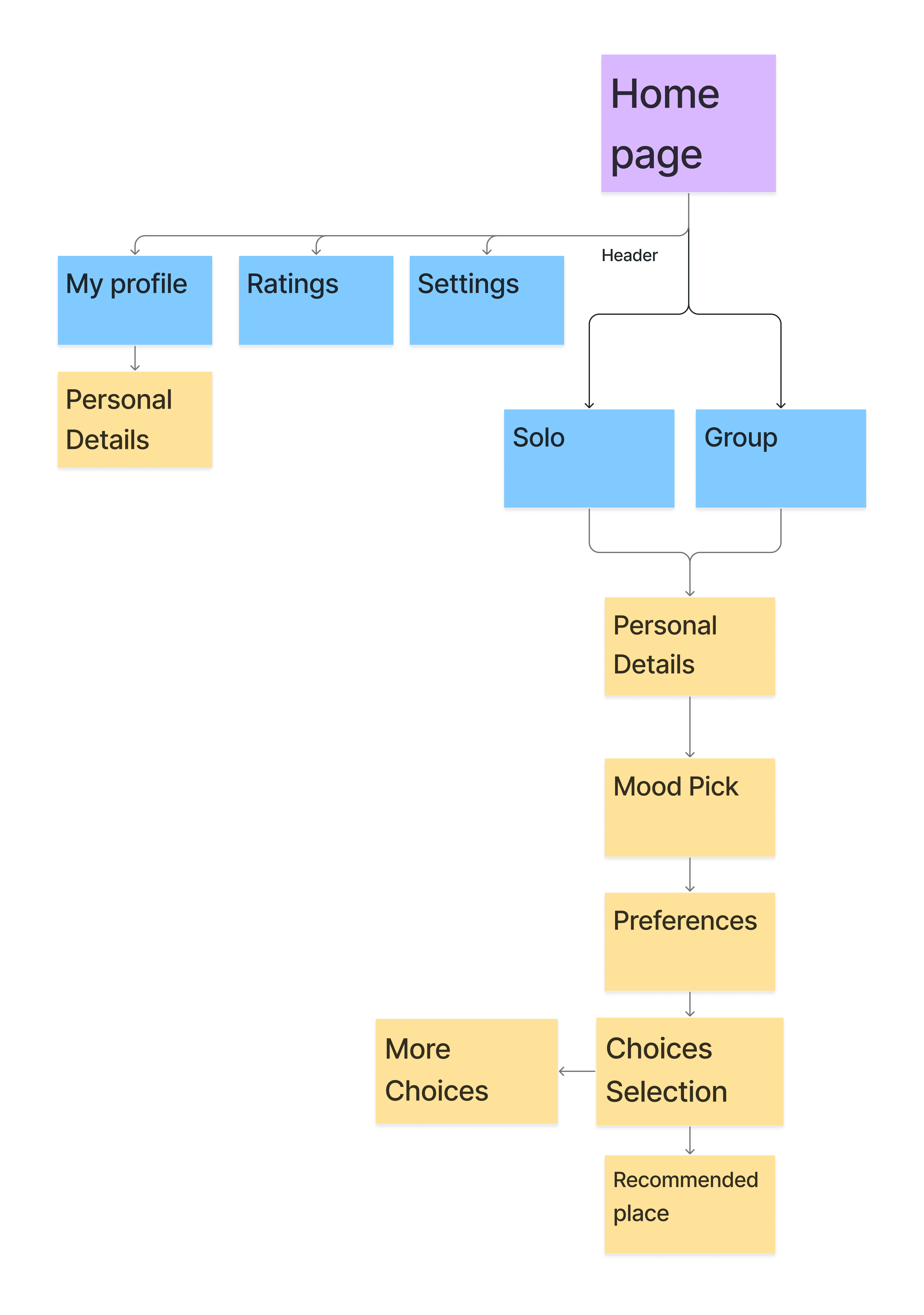
Information Architecture
User Flow
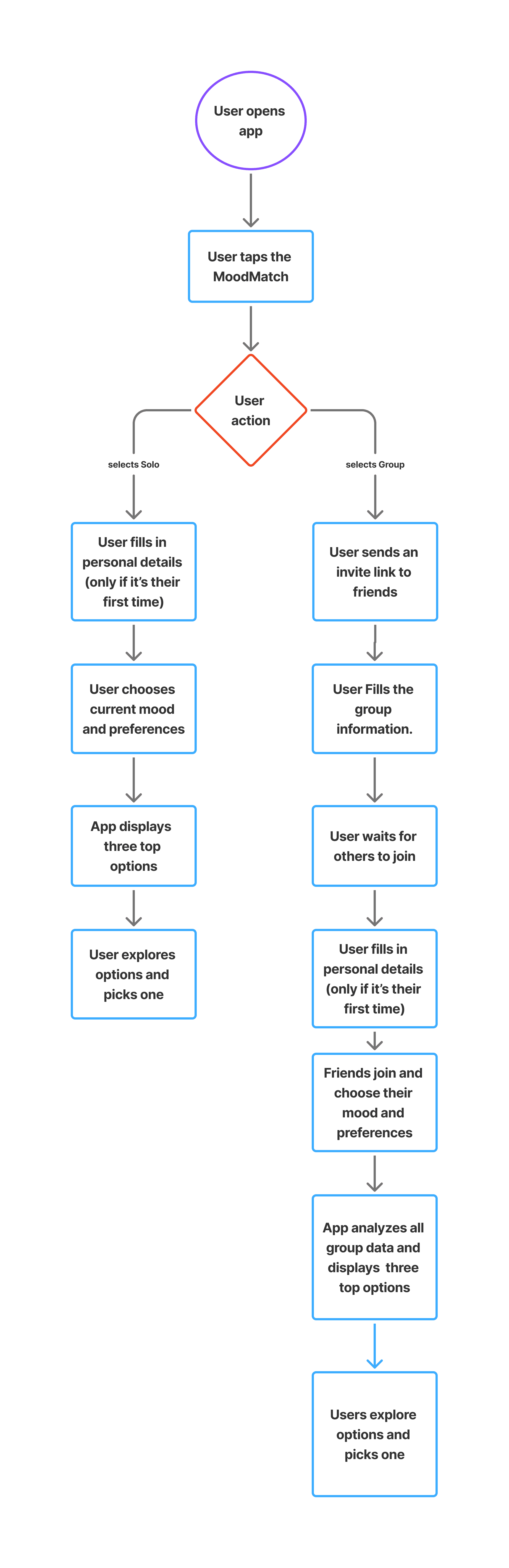
I chose these scenarios from the two personas to highlight key moments where the app creates value: helping Dani quickly find a place that matches his mood and budget, and helping Michal coordinate group plans smoothly so everyone can choose a place that fits their shared vibe without long discussions or wasted time.
Business Models

Affiliate marketing
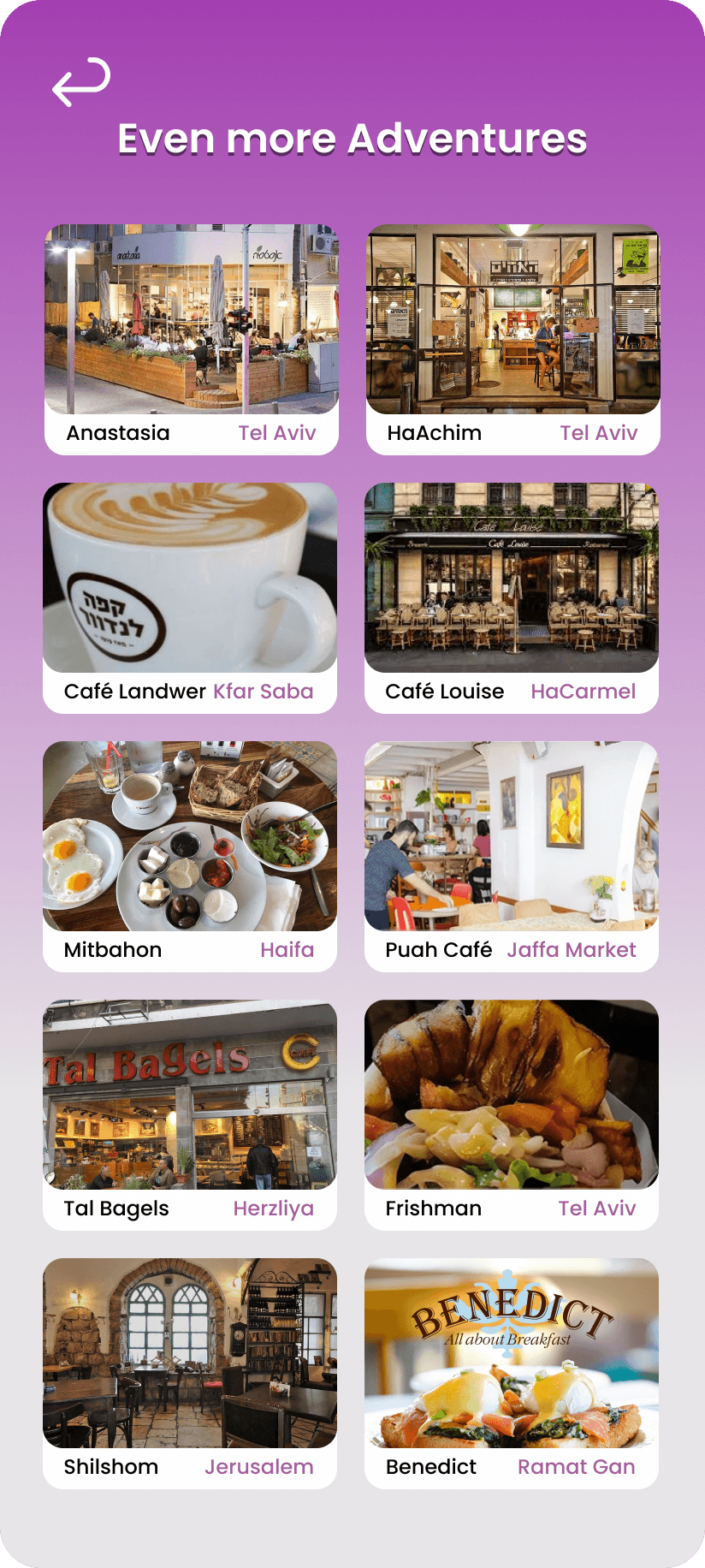
The app earns a small commission whenever users book tickets, order rides or make a purchase through integrated links like taxis or event platforms directly from the recommendation screen.

B2B
Entertainment venues pay for promotion inside the app through personalized coupons offered in the rewards system. Users receive these rewards after leaving a review, which helps improve the suggestions.

Advertising Revenue
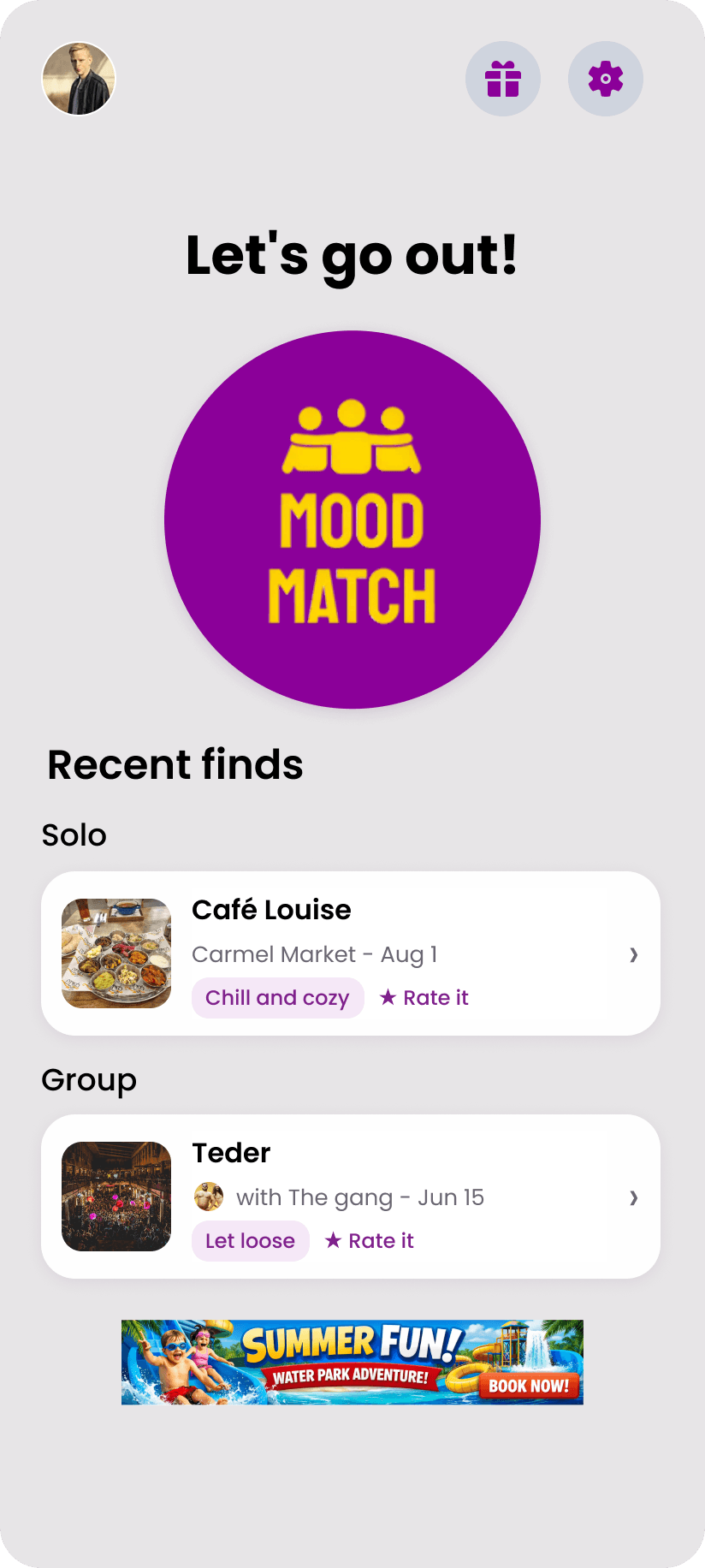
Non-intrusive ads appear only on the home screen, never during active user flows. This provides steady income without harming the user experience or cluttering the interface.
Design Evolution
From the first wireframes through the design system to the finished screens, this chapter follows how the interface took shape, and closes with the landing page that presents it.
Design Evolution
Design System

First user flow



Second user flow

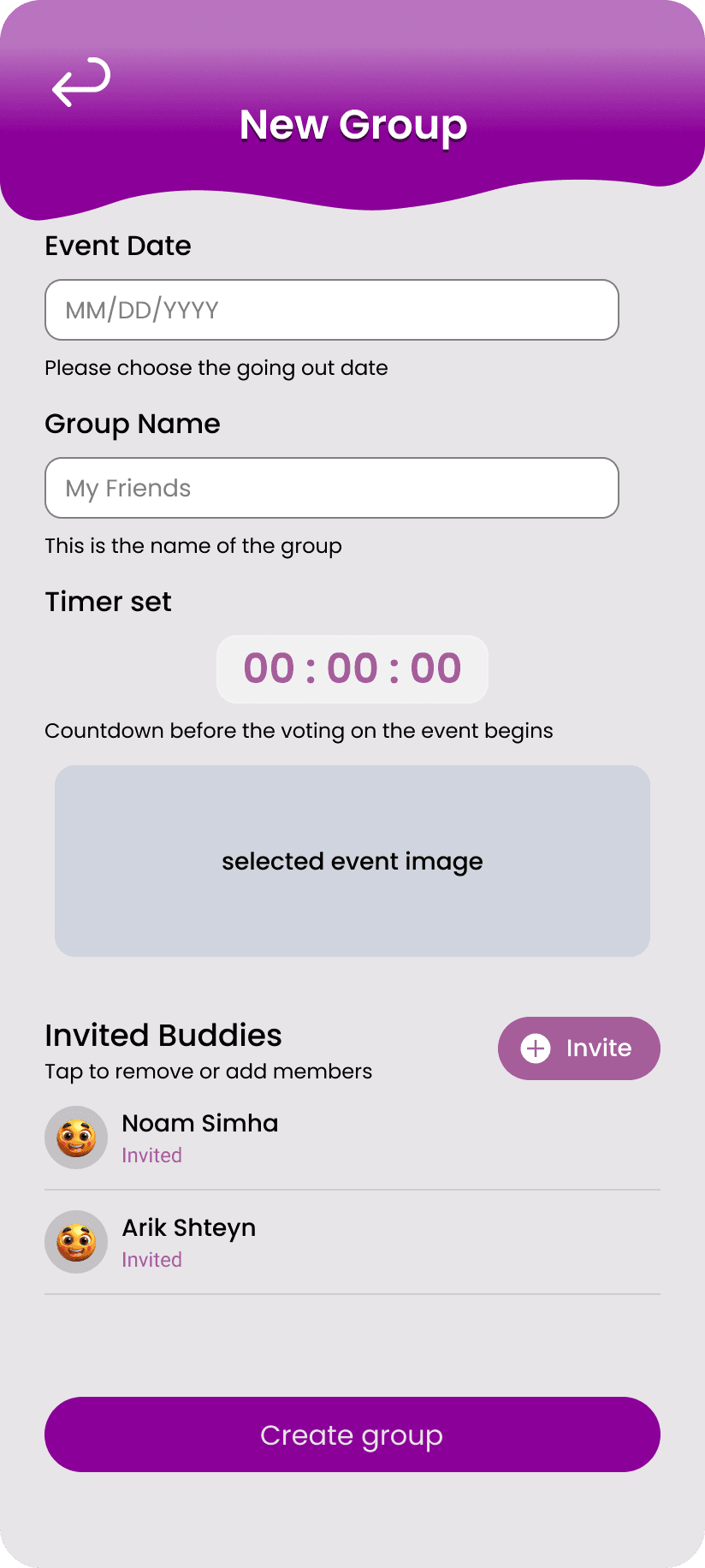




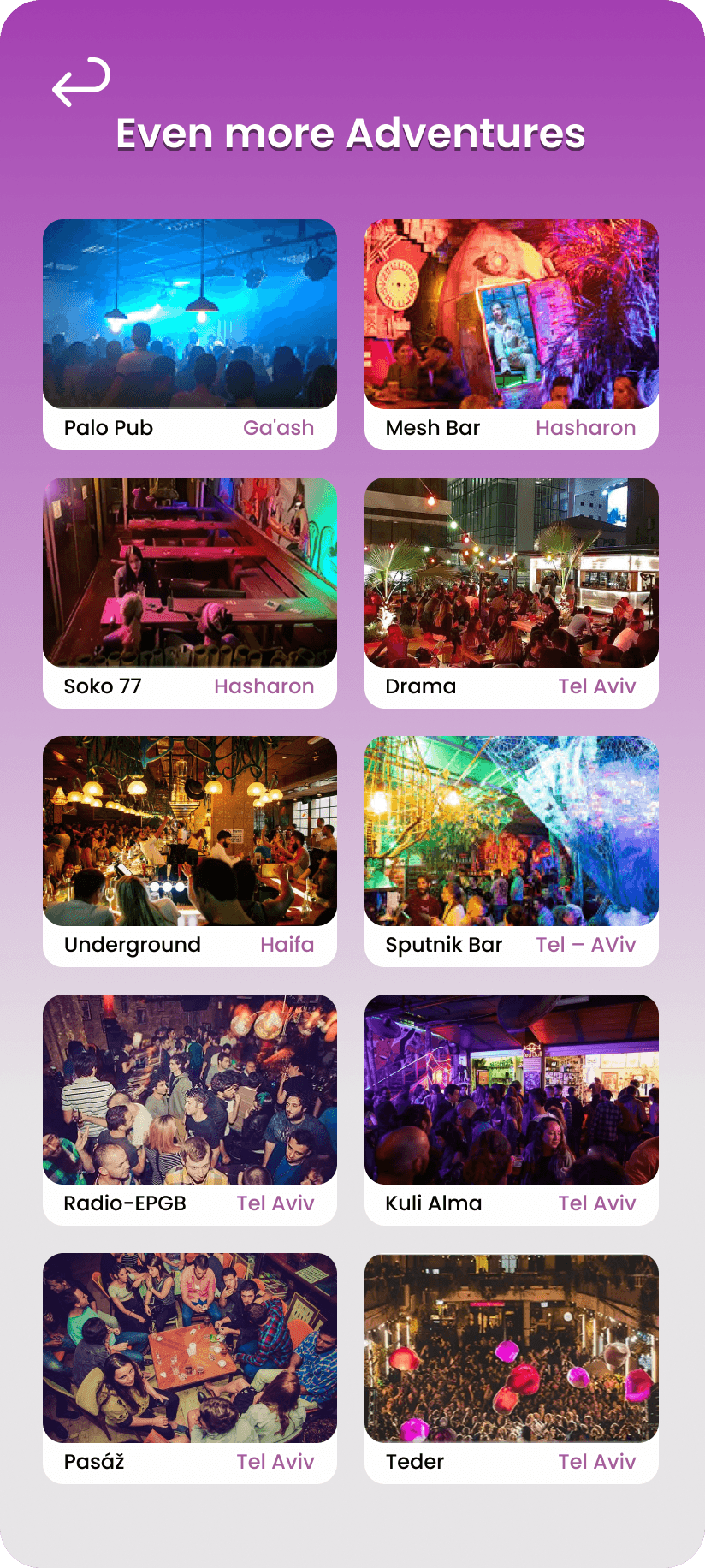

Rewards & System


Landing page
Wireframe

Final page

© 2026 Artur's Portfolio.
MOOD MATCH
Matched people with a relevant place to go out based on their vibe and preferences.
View Prototype
Tools Used


The Challenge
Going out should feel spontaneous, but planning it rarely does. I started by defining the goal, the problem and the people it affects, then looked at what the apps they already use get wrong.
Context
The Goal
Mood Match was created to make going out simple and inspiring. The app’s goal is to connect people with experiences that match their mood and vibe whether solo or with friends.

Target Users
Men and women aged 20-30, living in urban areas and going out frequently.
City visitors who want local experiences even without knowing the city.

The Problem
People often find it hard to plan where to go out. Existing apps give outdated or scattered information and don’t match the user’s mood or group needs. This causes wasted time, confusion and missed chances for
fun experiences.

Competitors
Criterion
Easy
Zappa
Tiuli
Karamel
Discovery
Nearby venues by category
Events by date and venue
Trails by region and difficulty
Activities by category
Freshness
Open-now filter
Dated event listings
Season filters; user trail updates
Not verified
Personalization
Favorites/history; tailored suggestions not checked
Favorites; tailored suggestions not checked
Route filters; tailored suggestions not checked
Not verified
Group planning
Not verified
Not verified
Not verified
Group activities listed; shared planning not checked
Booking
Not verified
Ticket purchase
Not verified
Not verified
Trust signals
Ratings and reviews
Official event details
Route details and user updates
Provider listings; verification not checked
Mood Match opportunities to test
Match nearby options to mood and budget, not only venue category.
Show opening hours and availability before someone heads out.
Help friends compare a shared shortlist and agree on one place.
User Survey
First Research Method: Quantitative survey.
Sample Size: 40 participants.
The majority of participants go out at least once a week. The target audience has high engagement with leisure activities.
75%
65% reported difficulty planning quickly and easily to decide where to go.
20
16
12
8
4
0
Strongly agree
agree
Both
Disagree
Strongly disagree
Just over half of users typically use apps or websites to plan outings.
52.5%
Most users feel existing apps do not help them find places that match their mood or desired atmosphere.
65%
Among those who do use apps, 40% said the information is outdated or incomplete.
40%
The majority of participants agreed they would use an app that gives personalized recommendations
70%
Interviews
Second Research Method: Qualitative in depth semi structured interviews using voice to text AI transcription.
Sample Size: 6

The Solution
1
Going Out Made Effortless
A mobile app that helps people find where to go out fast, simple and stress free. By analyzing users’ preferences, time,and location, it recommends nearby experiences.
2
Personalized Experiences, Instantly
Using a based mood system, the app personalizes suggestions to both individuals and groups. It brings one smooth flow so users can stop scrolling between apps.
User Personas

Dani Levi

University Student
Tel Aviv, campus
23 years old
Goals
Find places that match his energy and mood quickly.
Save time by skipping endless searches online.
Discover affordable, student-friendly hangouts nearby.
Frustrations
Too many apps to compare for a place that fits his mood and budget.
Unclear hours or availability can derail plans.
When no one makes a plan, he stays home.
Needs
Nearby suggestions filtered by mood and budget.
Clear opening hours and current availability.
An easy way to suggest a place or join friends.
Product implication
Lead with nearby places matched to his mood and budget, with opening hours and availability visible.

Michal Cohen

Marketing in Tech
Tel Aviv, apartment
29 years old
Goals
Organize group outings that fit everyone’s vibe.
Enjoy calm, quality experiences after busy workdays.
Discover authentic, local spots to share with friends.
Frustrations
Friends struggle to agree on one place.
Too many options and reviews to compare.
Online listings often misrepresent the atmosphere.
Needs
Compare places by shared preferences.
Reliable details about atmosphere and crowd.
Shortlist and share options with friends.
Product implication
Show places matched to the group’s vibe, with reliable atmosphere details.
Research & Insights
A quantitative survey of 40 people and a round of in depth interviews, turned assumptions into evidence and the patterns that came back became the two personas the rest of the project was designed around.
Information Architecture
User Flow
I chose these scenarios from the two personas to highlight key moments where the app creates value: helping Dani quickly find a place that matches his mood and budget, and helping Michal coordinate group plans smoothly so everyone can choose a place that fits their shared vibe without long discussions or wasted time.
Business Models
Affiliate marketing
The app earns a small commission whenever users book tickets, order rides or make a purchases through integrated links like Taxis or event platforms directly from the recommendation screen.
B2B
Entertainment venues pay for promotion inside the app through personalized coupons offered in the rewards system. Users receive these rewards after leaving a review, which helps improve the suggestions.
Advertising Revenue
Non-intrusive ads appear only on the home screen, never during active user flows. This provides steady income without harming the user experience or cluttering the interface.
Structure & Flow
A mood based recommendation flow that replaces scrolling between apps. This chapter covers what the product does, how its content is structured, how people move through it and how it earns.
Design Evolution
First user flow

Design System
Second user flow


Rewards & System
Landing page
Wireframe
Final page
Design Evolution
From the first wireframes through the design system to the finished screens, this chapter follows how the interface took shape, and closes with the landing page that presents it.
Introduction
Mood Match is a mobile app that recommends where to go out based on a person’s mood, available time and location, whether they are heading out alone or with friends. This case study follows the project from competitor and user research through personas, information architecture, flows and business model, to the design system and the final screens.
MOOD MATCH
Matched people with a relevant place to go out based on their vibe and preferences.
Tools Used


Context
Context
The Goal
Mood Match was created to make going out simple and inspiring. The app’s goal is to connect people with experiences that match their mood and vibe whether solo or with friends.

The Problem
People often find it hard to plan where to go out. Existing apps give outdated or scattered information and don’t match the user’s mood or group needs. This causes wasted time, confusion and missed chances for fun experiences.
Target Users
Men and women aged 20-30, living in urban areas and going out frequently.
City visitors who want local experiences even without knowing the city.

The Challenge
Going out should feel spontaneous, but planning it rarely does. I started by defining the goal, the problem and the people it affects, then looked at what the apps they already use get wrong.
User Survey
User Survey

First Research Method: Quantitative survey.
Sample Size: 40 participants.
The majority of participants go out at least once a week. The target audience has high engagement with leisure activities.
75%
65% reported difficulty planning quickly and easily to decide where to go.
20
16
12
8
4
0
Strongly agree
agree
Both
Disagree
Strongly disagree
Just over half of users typically use apps or websites to plan outings.
52.5%
Most users feel existing apps do not help them find places that match their mood or desired atmosphere.
65%
Among those who do use apps, 40% said the information is outdated or incomplete.
40%
The majority of participants agreed they would use an app that gives personalized recommendations
70%
Interviews
Interviews
Second Research Method: Qualitative in depth semi structured interviews using voice to text AI transcription.
Sample Size: 6

User Personas
User Personas
Dani Levi
University Student
Tel Aviv, campus
23 years old
Goals
Find places that match his energy and mood quickly.
Save time by skipping endless searches online.
Discover affordable, student-friendly hangouts nearby.
Frustrations
Too many apps to compare for a place that fits his mood and budget.
Unclear hours or availability can derail plans.
When no one makes a plan, he stays home.
Needs
Nearby suggestions filtered by mood and budget.
Clear opening hours and current availability.
An easy way to suggest a place or join friends.
Product implication
Lead with nearby places matched to his mood and budget, with opening hours and availability visible.
Michal Cohen
Marketing in Tech
Tel Aviv, apartment
29 years old
Goals
Organize group outings that fit everyone’s vibe.
Enjoy calm, quality experiences after busy workdays.
Discover authentic, local spots to share with friends.
Frustrations
Friends struggle to agree on one place.
Too many options and reviews to compare.
Online listings often misrepresent the atmosphere.
Needs
Compare places by shared preferences.
Reliable details about atmosphere and crowd.
Shortlist and share options with friends.
Product implication
Show places matched to the group’s vibe, with reliable atmosphere details.
The Solution
The Solution
1
1
Going Out Made Effortless
A mobile app that helps people find where to go out fast, simple and stress free. By analyzing users’ preferences, time, and location, it recommends nearby experiences.
2
2
Personalized Experiences, Instantly
Using a based mood system, the app personalizes suggestions to both individuals and groups. It brings one smooth flow so users can stop scrolling between apps.
Research & Insights
A quantitative survey of 40 people and a round of in depth interviews, turned assumptions into evidence and the patterns that came back became the two personas the rest of the project was designed around.
Information Architecture
Information Architecture
User Flow
User Flow
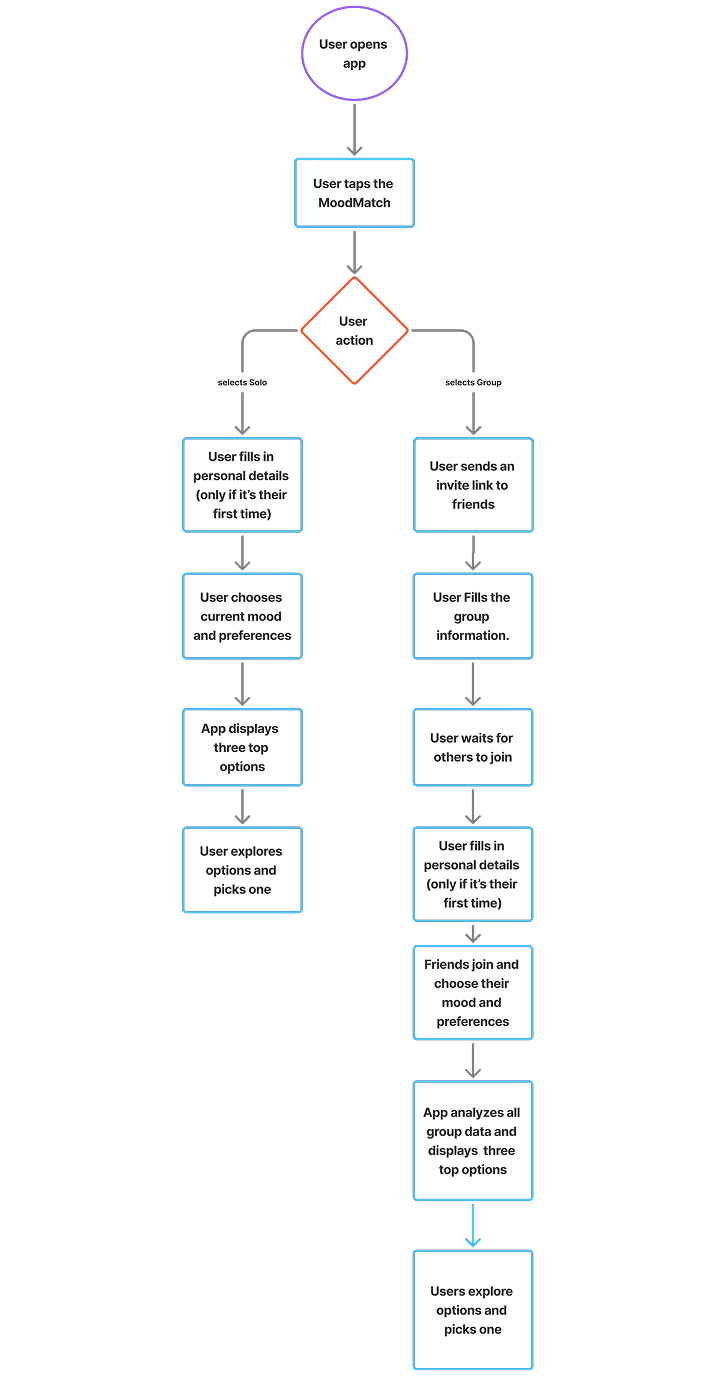
I chose these scenarios from the two personas to highlight key moments where the app creates value: helping Dani quickly find a place that matches his mood and budget, and helping Michal coordinate group plans smoothly so everyone can choose a place that fits their shared vibe without long discussions or wasted time.
Business Models
Business Models
Affiliate marketing
The app earns a small commission whenever users book tickets, order rides or make a purchases through integrated links like Taxis or event platforms directly from the recommendation screen.
B2B
Entertainment venues pay for promotion inside the app through personalized coupons offered in the rewards system. Users receive these rewards after leaving a review, which helps improve the suggestions.
Advertising Revenue
Non-intrusive ads appear only on the home screen, never during active user flows. This provides steady income without harming the user experience or cluttering the interface
Structure & Flow
A mood based recommendation flow that replaces scrolling between apps. This chapter covers what the product does, how its content is structured, how people move through it and how it earns.
Design Evolution
Design Evolution
First user flow
Second user flow
Rewards & System
Design System

Landing page
Landing page
Introduction
Introduction
Mood Match is a mobile app that recommends where to go out based on a person’s mood, available time and location, whether they are heading out alone or with friends. This case study follows the project from competitor and user research through personas, information architecture, flows and business model, to the design system and the final screens.